Twenty-litre water jars are a familiar sight in Indian offices, homes and shops. They are reused many times, travel through busy delivery networks and come back to the plant carrying dust, stickers and sometimes much worse. Unlike a single-use PET bottle, a returnable jar must be thoroughly cleaned before every fill. That makes jar lines quite different from regular bottling lines, and choosing the right machine requires a clear understanding of the process.
The Jar Line Process
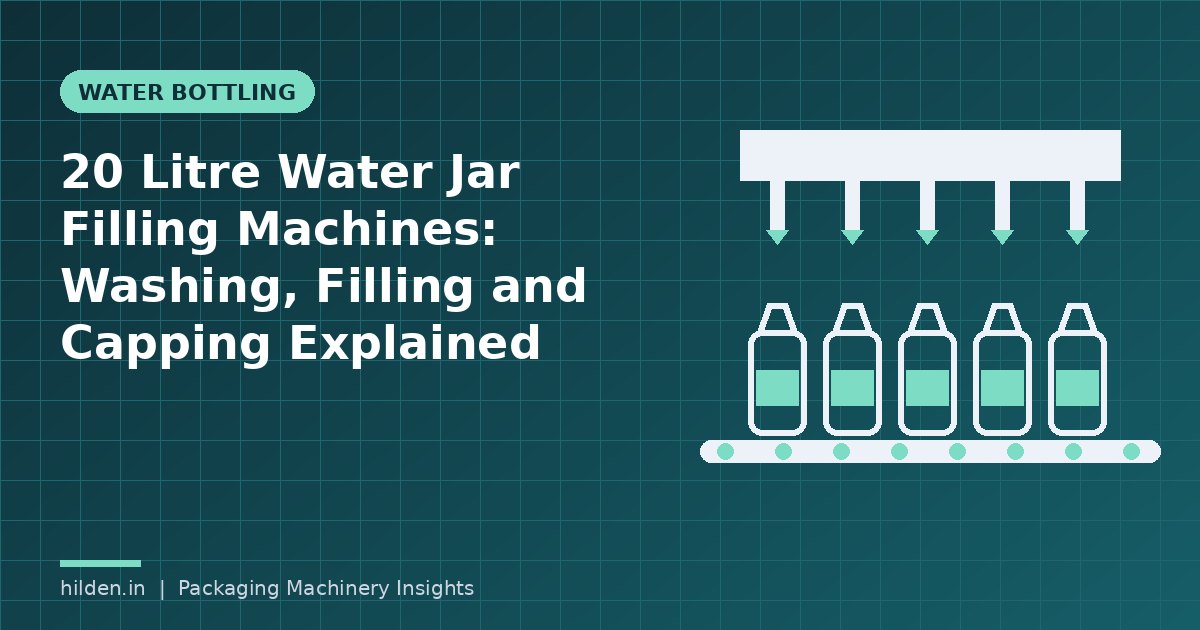
A typical 20 litre jar line follows these stages:
- Decapping and inspection of returned jars
- External washing to remove dirt and labels
- Internal washing with detergent, hot water or caustic solution
- Rinsing with treated water, often with ozonated water as the final rinse
- Filling
- Capping
- Sealing with a shrink cap sleeve or neck band
- Coding and labelling
Semi-Automatic and Automatic Machines
Small plants often begin with semi-automatic jar lines, where operators load jars into a washing station and move them to filling and capping by hand. These systems are affordable and need little space. As demand grows, automatic linear machines take over, moving jars through washing, filling and capping stations with pneumatic indexing. Outputs range from about 60 to several hundred jars per hour depending on configuration.
Washing Is the Heart of the Machine
Washing effectiveness depends on four factors: chemical, temperature, contact time and mechanical action. A good jar washer uses multiple spray stations with high-pressure nozzles reaching every corner inside the jar. Detergent or caustic stages remove biofilm and organic deposits. Hot water stages improve cleaning. Final rinses with treated and ozonated water remove chemical residue.
Recirculating wash water saves water and chemicals, but the tanks must be monitored and refreshed regularly to keep cleaning effective.
Filling and Capping
Filling is usually by gravity or pressure using multiple nozzles. Fill levels must be consistent, and nozzles should be sanitised regularly. Jars are typically closed with press-on caps, which are pressed down by a pneumatic capping head. A shrink band or neck sleeve may be applied for tamper evidence.
Inspection Before Filling
Returned jars can have cracks, discolouration, strong odours or foreign objects. Experienced operators inspect jars visually and with simple odour checks before loading. Jars that fail inspection should be removed from circulation, not washed and reused. Some plants add light inspection booths to make defects easier to see.
Materials and Hygiene
Machine contact parts should be stainless steel, with SS 316 for wetted areas where possible. The filling zone should be enclosed to protect clean jars from airborne contamination.
Space and Utilities
Jar lines need water for washing, a heating system for hot washing, compressed air for pneumatic movements and drainage for wastewater. Plan a layout that separates dirty incoming jars from clean, filled jars.
Managing Caps and Seals
Press-on caps should be stored in clean, closed containers and handled with gloves. Some plants rinse caps with treated water before use. A damaged or dirty cap can undo all the work of washing and filling.
Choosing the Right Capacity
Estimate the number of jars you deliver per day, add growth and peak season demand, then size the line accordingly. Jar lines that run continuously at maximum output leave no margin for cleaning and maintenance.
Hilden supplies semi-automatic and automatic 20 litre jar washing, filling and capping machines, and can help you plan a line that delivers clean, safe jars at the volume your business needs.