If you pick up a bottle of a popular soft drink or packaged water in India, the label is very likely a thin plastic wrap-around film. That label was probably applied by a roll-fed hot melt labelling machine, one of the most cost-effective technologies for high-volume bottlers. It does not get as much attention as shrink sleeves or self-adhesive labels, but for the right application it is hard to beat.
How Roll-Fed Hot Melt Labelling Works
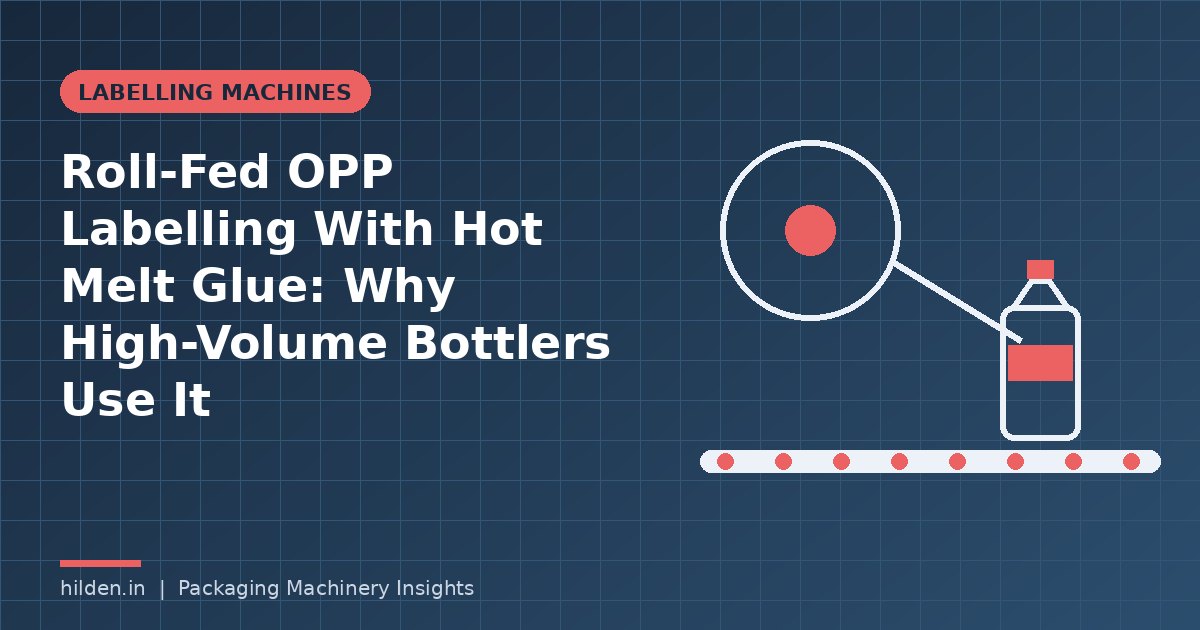
The labeller takes a continuous roll of printed OPP (oriented polypropylene) film. A cutting drum cuts each label to length using registration marks printed on the film. A small strip of hot melt glue is applied to the leading edge of the label, which is then picked up by the rotating bottle. As the bottle turns, the label wraps around it, and a second glue strip on the trailing edge seals the overlap.
Why Bottlers Like It
The biggest attraction is material cost. Plain film on a roll, without a release liner and without the extra film needed for sleeves, is one of the cheapest ways to label a bottle. At volumes of tens of thousands of bottles per hour, the saving per bottle adds up to a significant amount over a year.
Other advantages include:
- High speeds on rotary machines suited to large beverage lines
- Minimal waste, because there is no liner to dispose of
- Good print quality with gloss or matte finishes
- Moisture resistance, which is useful for chilled drinks that sweat in display fridges
Limitations to Keep in Mind
Roll-fed OPP labels are wrap-around labels, so they suit cylindrical sections of a bottle. They cannot cover shoulders or contoured areas the way a sleeve can. The machine also requires more operator skill than a sticker labeller, because glue temperature, film tension and cutting registration all need attention.
Controlling Glue Consumption and Quality
Hot melt glue is applied in small quantities, but over a day it is a real cost. Modern machines apply glue only where it is needed and keep the glue tank at a steady temperature. Too much glue causes stringing and messy bottles, while too little leads to labels that open at the seam. Training operators to check glue patterns at the start of every shift prevents both problems.
PET Bottles and Expansion
Carbonated drinks in PET bottles expand slightly under pressure, especially in hot weather. A good OPP label allows for this expansion with the right film thickness and a properly placed seam so that the label does not tear or wrinkle. Discuss your product type with your film supplier and machine maker together.
Where It Fits in a Line
Roll-fed labellers typically sit after the filler and capper, before the batch coder and shrink wrapper. Because they run at high speed, conveyors before and after must be designed for smooth flow, with accumulation space so a short stop at the labeller does not halt the filler.
Film Specification Tips
Agree the film thickness, cut-off length, registration mark position and unwind direction with your label printer before the first order. Small mismatches between the printed roll and the machine settings cause most start-up headaches.
Is It Right for You?
If you are a beverage, water or edible oil producer running high volumes on cylindrical bottles, roll-fed hot melt labelling deserves serious consideration. Smaller producers may find a pressure-sensitive labeller easier to start with. Hilden can review your bottle design and volumes to help you decide which labelling technology gives the best value.