

Open a new bottle of edible oil, a jar of instant coffee or a tub of protein powder and you will usually find a foil membrane bonded across the mouth. That membrane is created by an induction sealer, a machine that welds a foil liner to the container without ever touching it. Induction sealing has become standard across food, pharmaceutical, agrochemical and personal care packaging because it delivers tamper evidence, leak protection and longer shelf life in a single step.
What Is Inside the Cap?
An induction seal liner is a layered disc that sits inside the cap. A typical one-piece liner contains a heat-seal layer that bonds to the container, an aluminium foil layer and a backing. A two-piece liner adds a wax layer and a pulpboard backing that stays in the cap after the foil is sealed, acting as a reseal gasket once the consumer removes the foil.
How Induction Sealing Works
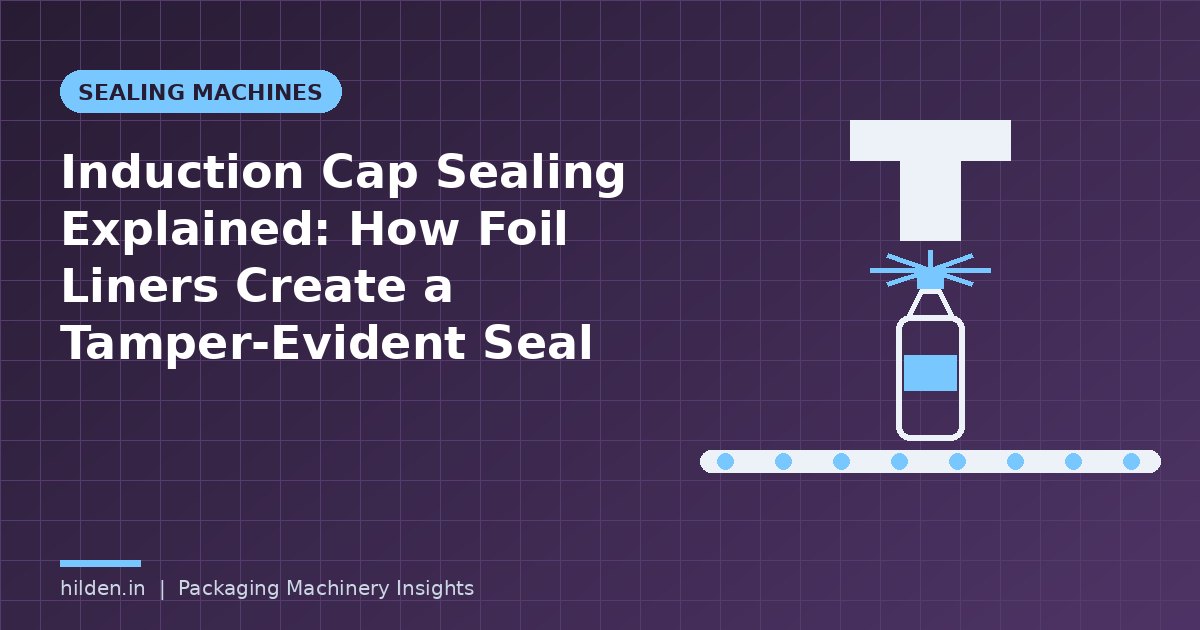
After the bottle is capped, it passes under an induction head. The head generates an electromagnetic field. The field induces electrical currents in the aluminium foil, which heats up rapidly. The heat melts the sealing layer and bonds it to the container lip. The cap and container themselves are barely warmed. All of this happens in a fraction of a second as the bottle moves along the conveyor.
Why Brands Use It
- Tamper evidence: a missing or broken seal is obvious to the customer.
- Leak protection: liquids stay inside during transport, even if the cap loosens slightly.
- Freshness: the seal acts as a barrier against moisture and oxygen.
- Odour control: strong-smelling products such as pesticides and spices are contained.
Key Settings for a Good Seal
The power level and conveyor speed together decide how much energy each liner receives. Too little energy gives a weak seal that peels without resistance. Too much energy can scorch the liner, wrinkle the foil or even deform a PET neck. Head height is also critical: the head must sit as close to the cap as the manufacturer recommends, and that distance should be consistent across bottle sizes.
Cap torque matters too. If the cap is loose, the liner does not press firmly against the lip during sealing. Good capping and good induction sealing go hand in hand.
Container and Liner Compatibility
The sealing layer must match the container material. Liners for PET, HDPE, PP and glass are different. Using the wrong one is a common cause of failed seals. Always confirm compatibility with the liner supplier and run trials with your actual containers.
Air-Cooled or Water-Cooled?
Low and medium-speed sealers are often air-cooled, making them simple to install. High-power sealers for fast lines or large caps may be water-cooled. Consider your speed, cap diameter and plant environment when choosing.
Testing Seal Quality
Simple checks include peeling the foil by hand to see if it removes cleanly and leaves an even pattern, inverting filled bottles to look for leaks and performing a vacuum leak test. Many plants add a sensor after the sealer that rejects bottles without foil.
Where It Fits in Your Line
The induction sealer typically sits immediately after the capper and before the labeller. It needs a straight section of conveyor and enough clearance around the head.
Hilden supplies induction cap sealing machines suited to different cap sizes and line speeds, and can help you match the sealer to your capper and container for consistent, tamper-evident seals.